EN
EN

Direct Thermal Label With Hot Melt Adhesive Thermal Paper For Shipping Mark Printing
Overview
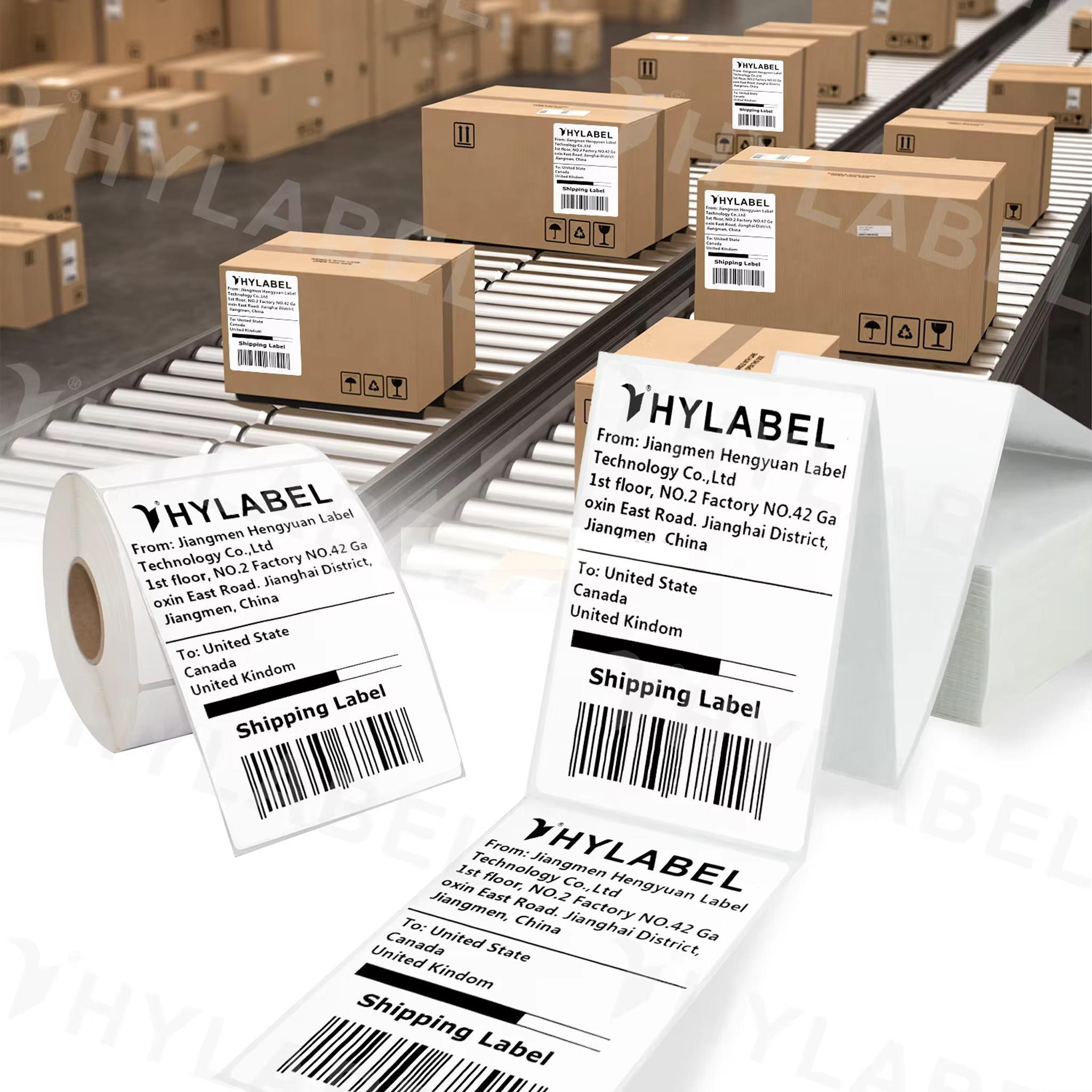
Direct thermal label with hot melt adhesive thermal paper serves as a practical labeling solution dedicated to shipping mark printing for logistics, warehousing and e‑commerce businesses. Different from transfer labels, this material needs no ribbon during printing. Clear texts and scannable barcodes are formed purely through heat from the thermal print head, which greatly simplifies daily label‑making workflows for mass carton marking and outbound shipment operations.

Performance & Application
This direct thermal label stock runs stably on most desktop and industrial direct thermal printers, supporting continuous high‑speed printing for large‑volume shipping mark production. Finished printed barcodes and text remain readable throughout routine logistics circulation. It is widely applied in parcel shipment identification, warehouse outbound marking and e‑commerce order carton labeling. Since extra thermal ribbon is not required, businesses can effectively lower long‑term consumable and operating costs for daily carton marking work.
Product Advantages
This direct thermal label with hot melt adhesive thermal paper delivers multiple practical strengths for shipping mark operations. It generates sharp, scannable barcodes and text relying only on thermal print head heat, with no thermal ribbon required to cut consumable costs. The industrial hot melt adhesive provides powerful initial tack, firmly bonding to rough corrugated cartons and resisting edge‑lifting under regular transit temperature and humidity changes. The top‑coated thermal paper withstands common friction during cargo stacking and handling to slow print fading. It offers broad compatibility with both desktop and industrial direct thermal printers, supporting stable high‑speed batch printing. Matched with silicone release liner, it works smoothly for manual peeling and automatic label dispensing, improving overall labeling efficiency for logistics and e‑commerce workflows.

Conclusion